WHY DID WE CREATE PHASE 2?
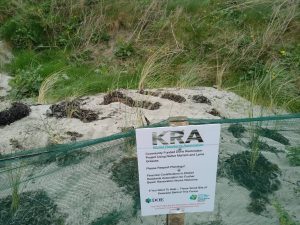 Phase 2 was aimed at greatly extending the protected area of dunes and to create fencing with handrails to to assist less abled people to get down onto beach.
This followed the success of ‘phase 1’ that had reversed erosion and protected the picnic and carpark falling into the sea. We were also concerned for 2 local residents houses near the beach.
 Lecale Conservation and the Kilclief Residents association applied for and won grants from ‘Live Here Love Here’ and from NM&D Councils biodiversity scheme for the grant.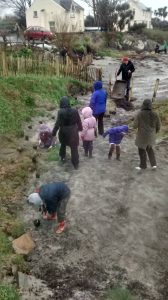
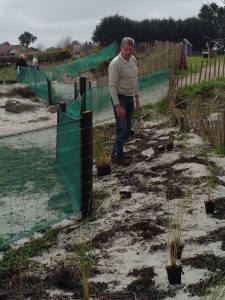
Chestnut Paling fencing was used to create sand traps and prevent human ingress to sensitive areas. Fences directed human traffic to one of two paths onto the beach.
 Volunteers from Kilclief residents, Lecale Conservation and a Belfast Scout group who ‘adopted’ the beach planted large numbers of plants grown by Kilclief eco-charity True Harvest Seeds.
FAILURE OF PART OF PROJECT.
The fencing contractor erected chestnut palings in a linear pattern, this creates maximum wind and tidal force on the fence and does not accumilate sand. Pailings must always be erected in a ‘zig-zag’ of 90 degrees along the line of the beach or it will not collect sand and storms will take it away.
AWARD WINNING PORJECT
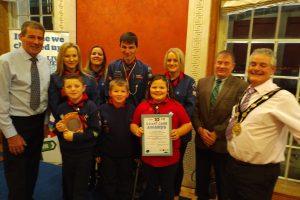
The phase 2 Beach restoration project won a Stormont environmental award for Kilclief Residents Association, Carryduff Scouts and Lecale Conservation..
THINGS WE DID WRONG IN THIS PROJECT
The contractor did not zig-zag the chestnut pailings at the front side of the plantings at the required 90 degreess every 1.5 meters. Instead the pailings were installed in line with the beach resulting in
- the inability of the palings to rapidly gather sand from the wind.
- Creating a barrier for wave and wind action and thus destruction in following storms
The correct use of plainings to collect wind bourne sand is essential for project success.. The 90 degrees zig zag pattern if not followed is a waste of money on expensive fencing.